
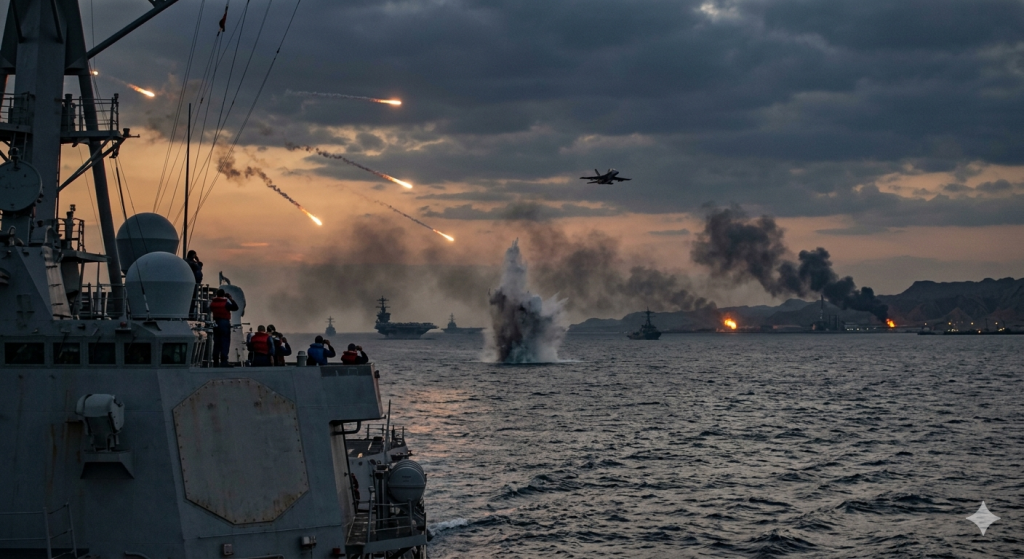
U.S. Launches Strikes on Iran; Tehran Claims Attacks on U.S. Fleet
U.S. Launches Strikes on Iran Following Helicopter Downing
The United States launched a new round of military strikes against Iran after American officials accused Tehran of shooting down a U.S. Army Apache helicopter near the Strait of Hormuz. According to U.S. Central Command (CENTCOM), the operation was carried out as a “self-defense” response intended to deter further attacks against American personnel and assets in the region.
President Donald Trump stated that the United States could not ignore what he described as an unjustified attack on U.S. forces. Although both helicopter crew members survived and were successfully rescued, the incident marked one of the most serious direct confrontations between Washington and Tehran in recent months.
The U.S. strikes reportedly targeted Iranian radar installations, surveillance systems, and air-defense facilities along the Strait of Hormuz. American officials emphasized that the attacks were limited in scope and were not intended to trigger a broader war. CENTCOM described the operation as a proportional response designed to protect freedom of navigation and regional security.
Iran strongly condemned the strikes, accusing Washington of violating previous ceasefire understandings and escalating tensions unnecessarily. Iranian officials argued that continued American military operations near Iranian territory increase the risk of accidents and further conflict.
The latest exchange has raised concerns among international observers who fear the situation could spiral into a wider regional conflict involving Gulf states, shipping routes, and energy infrastructure. The Strait of Hormuz remains one of the world’s most important maritime chokepoints, with a significant percentage of global oil exports passing through its waters every day.
Despite the military escalation, both countries have publicly stated that diplomatic channels remain open. However, analysts warn that repeated retaliatory actions increase the possibility of miscalculation and make future negotiations more difficult.