
Ancient Roman Road Discovered Beneath Modern Italian Town
Archaeologists in northern Italy have uncovered a remarkably well-preserved section of an ancient Roman road beneath the center of a modern town, a discovery that is providing new insight into how transportation and trade functioned during the height of the Roman Empire. The road was found during a routine infrastructure renovation project when construction workers noticed unusually large stone slabs buried beneath layers of soil and modern pavement. What initially appeared to be a small historical feature quickly developed into one of the region’s most significant archaeological discoveries in recent years.
Experts who examined the site confirmed that the stone roadway dates back nearly 2,000 years. Preliminary studies suggest it formed part of a larger transportation network that connected important Roman settlements across northern Italy. The road was designed to support the movement of merchants, military units, government officials, and travelers throughout the empire. Archaeologists say the discovery highlights the extraordinary engineering skills of Roman builders, whose work continues to survive despite centuries of environmental changes and urban development.
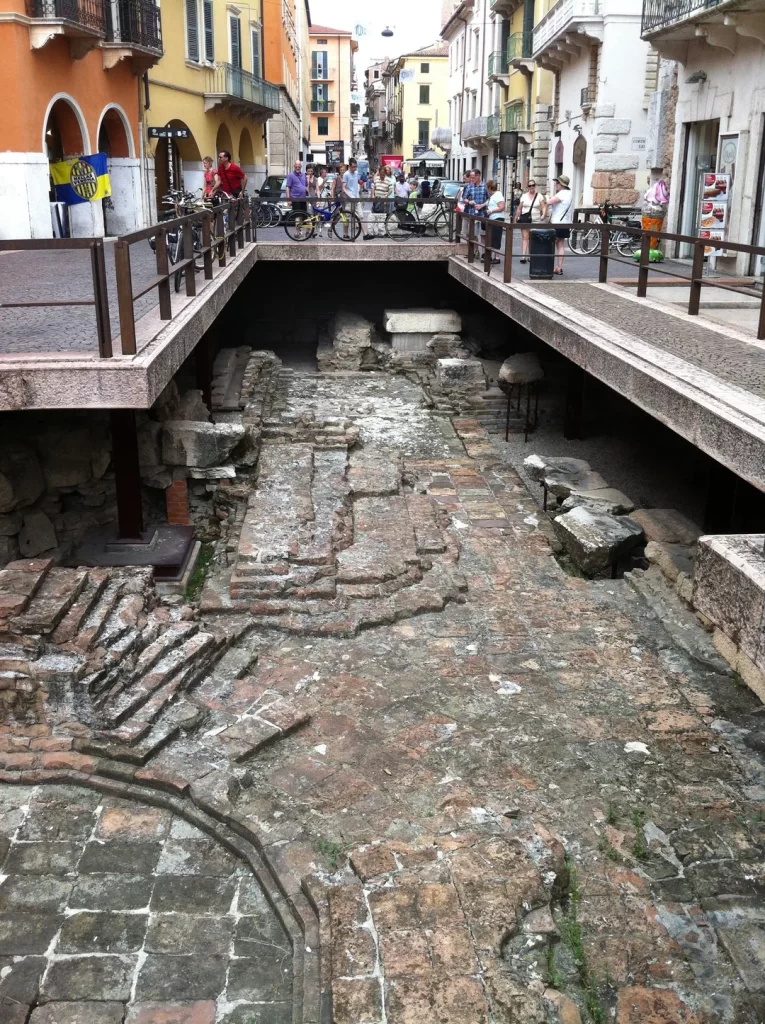
One of the most surprising aspects of the discovery is the condition of the road itself. Several sections remain largely intact, including paving stones, drainage channels, and structural foundations. Researchers noted that the road was constructed using layers of stone and gravel designed to improve durability and drainage. This approach allowed Roman roads to withstand heavy use and varying weather conditions. In some areas, the stone surface shows visible wear patterns believed to have been caused by carts and wagons traveling along the route centuries ago.
Historians believe the road played an important role in regional commerce. During the Roman period, northern Italy served as a key economic hub linking the Italian Peninsula with territories farther north. Goods such as wine, olive oil, grain, textiles, and metal products were regularly transported along these routes. The newly discovered road may help researchers better understand the movement of goods and people throughout the region. Artifacts recovered near the site, including pottery fragments and small coins, are currently being analyzed to determine more precise dates and patterns of activity.
The discovery has generated excitement among local residents and officials. Many community members have visited the excavation area to observe the work being carried out by archaeologists. Local authorities are considering several preservation options, including incorporating parts of the road into a public exhibition. Some proposals involve creating a glass-covered viewing area that would allow visitors to see the ancient roadway while preserving it for future generations. Others suggest developing a small museum dedicated to the history of transportation in the region.
Tourism experts believe the find could significantly increase visitor interest in the town. Italy is already home to some of the world’s most famous archaeological sites, but smaller discoveries often provide unique opportunities for local communities to showcase their history. Officials hope the project will attract visitors interested in Roman engineering, archaeology, and cultural heritage while supporting local businesses and educational initiatives.
Researchers emphasize that excavation work is still ongoing. Additional sections of the road may remain hidden beneath surrounding streets and buildings. Ground-penetrating radar surveys are being conducted to identify possible extensions of the route. If further sections are uncovered, historians may be able to reconstruct a larger portion of the ancient transportation network and gain a deeper understanding of how Roman infrastructure influenced the development of modern European roads.
The discovery serves as a reminder that traces of the ancient world continue to exist beneath modern cities and towns. Even after two millennia, Roman engineering remains visible in structures that have endured through generations of change. As excavation efforts continue, archaeologists hope the road will reveal new stories about one of history’s most influential civilizations and the transportation systems that helped sustain it.