
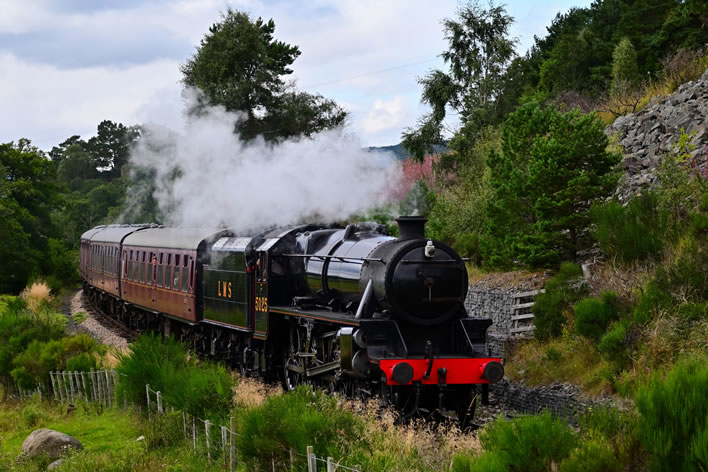
Historic Steam Train Returns to Service for Rural Communities
A century-old steam locomotive has returned to active service after years of careful restoration, bringing renewed excitement to railway enthusiasts, local residents, and tourists alike. The train, which once played a vital role in connecting remote rural communities, is now operating once again along a scenic route that passes through mountains, forests, and historic villages. Its return represents not only the preservation of an important piece of transportation history but also a reminder of the role railways played in shaping regional development during the late nineteenth and early twentieth centuries.
The locomotive was originally built in the early 1900s, a period when steam-powered trains were among the most important forms of transportation in many parts of the world. For decades, the railway served as a critical link between farming communities and larger cities. Farmers relied on the trains to transport crops, livestock, and other goods to markets, while residents used them to travel for work, education, and commerce. Before the widespread use of automobiles and highways, railways were often the fastest and most reliable means of transportation available.
Over time, however, advances in transportation technology led to the decline of many steam railways. Diesel and electric trains became more efficient and economical to operate, while expanding road networks provided alternative travel options. Eventually, the historic locomotive was retired and placed in storage. Years of inactivity left the train in poor condition, and many feared it would never run again.
The restoration project began when a group of railway enthusiasts and local historians launched a campaign to save the locomotive. Volunteers, engineers, mechanics, and preservation experts joined forces to repair the aging machine. The work proved challenging. Many original components were worn, damaged, or missing entirely, requiring specialists to recreate parts using historical blueprints and traditional manufacturing techniques. The restoration process took several years and involved thousands of hours of labor.
Despite these difficulties, the project gradually gained momentum. Community organizations, local businesses, and government agencies provided financial support, recognizing the locomotive’s cultural and historical significance. As restoration progressed, public interest continued to grow. Residents followed updates closely, and many visited workshops to observe the work being carried out. The project became a source of pride for the surrounding region.
When the locomotive finally returned to service, crowds gathered at stations along the route to witness the event. The sound of the steam whistle and the sight of the restored engine pulling passenger cars generated excitement among visitors of all ages. Many older residents recalled traveling on similar trains during their youth, while younger generations experienced steam railway travel for the first time.
Today, the train operates as both a tourist attraction and an educational resource. Passengers have the opportunity to experience travel much as it existed a century ago. The journey offers panoramic views of the countryside while providing insight into the history of rail transportation. Guides and museum exhibits at various stations explain how steam locomotives functioned and why they were so important to economic development.
Tourism officials believe the railway will provide significant benefits to local communities. Increased visitor numbers are expected to support hotels, restaurants, shops, and other businesses along the route. Small towns that once depended on the railway for economic activity may once again benefit from its presence, albeit in a different way than before.
Environmental considerations have also played a role in the project. While steam locomotives are no longer practical for large-scale transportation, preservationists argue that operating historic trains on limited routes provides educational value that outweighs their relatively small environmental impact. The railway serves as a living museum, allowing people to experience technology that helped transform society during the industrial age.
The successful restoration demonstrates what can be achieved when communities unite around a shared goal. By preserving the locomotive, volunteers have ensured that an important chapter of transportation history remains accessible to future generations. The train’s return is more than a nostalgic celebration of the past—it is a reminder of how innovation, determination, and community spirit can keep history alive long after its original era has passed.