
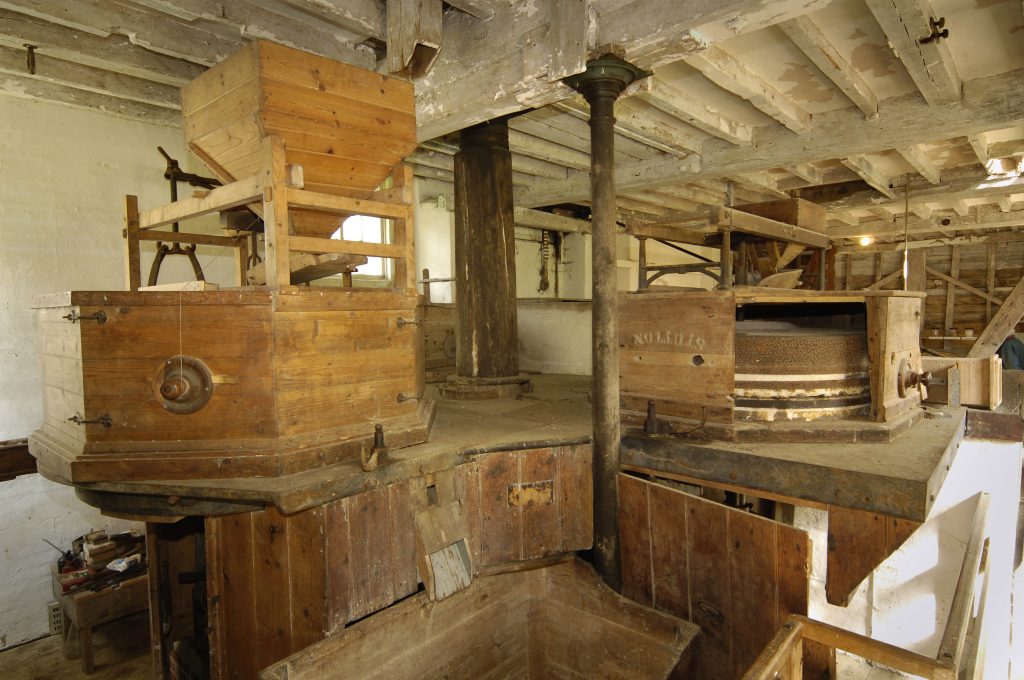
Medieval Watermill Produces Flour Again After Restoration
A medieval watermill that stood silent for decades has returned to operation following an extensive restoration project, allowing visitors to witness a centuries-old method of flour production in action once again. Located in a rural European village, the historic mill is now grinding grain using the same principles that powered communities throughout the Middle Ages. Historians, engineers, and local residents have celebrated the reopening as an important achievement in preserving cultural heritage and traditional technology.
The watermill is believed to date back several hundred years and was once a central part of everyday life in the surrounding region. Before the development of modern industrial machinery, communities depended heavily on mills to process grain into flour for bread and other staple foods. Farmers would bring harvested wheat, barley, and rye to the mill, where the power of flowing water turned large grinding stones capable of processing significant quantities of grain. The system provided a reliable source of food production and played a critical role in supporting local economies.
Over time, advances in industrial technology gradually reduced the need for traditional watermills. Steam-powered equipment, followed by electric machinery, allowed flour to be produced more efficiently and on a much larger scale. As a result, many historic mills were abandoned, demolished, or left to deteriorate. The recently restored watermill suffered a similar fate. Years of neglect caused structural damage, while many of its original mechanical components became worn or unusable. By the early twenty-first century, the mill had become little more than a historical landmark.
Concerned about the loss of an important part of local history, preservation groups launched an initiative to restore the building and its machinery. The project brought together historians, engineers, architects, craftsmen, and volunteers who shared a commitment to preserving traditional skills and knowledge. Their goal was not simply to repair the structure but to return it to full working order.
The restoration process required extensive research. Historical records, old photographs, and surviving examples of similar mills were studied to ensure accuracy. Skilled craftsmen recreated wooden gears, water wheels, and other components using traditional methods whenever possible. In some cases, modern tools were used to improve safety and durability, but the overall design remained faithful to the original construction. The work took several years and required substantial financial support from government grants, heritage organizations, and private donors.
When the project was finally completed, the results exceeded expectations. The water wheel once again began turning under the force of the nearby stream, transmitting energy through a series of gears and shafts to the grinding stones inside the mill. Visitors were able to observe the entire process, from grain entering the machinery to freshly milled flour emerging at the end. For many, the experience provided a fascinating glimpse into a way of life that existed long before modern factories and automated production systems.
Educational programs have become a major part of the mill’s operation. School groups regularly visit to learn about medieval technology, agriculture, and daily life. Historians explain how watermills represented one of the most important technological innovations of the Middle Ages, allowing communities to increase productivity and improve living standards. By harnessing renewable energy from rivers and streams, these mills demonstrated an early form of sustainable power generation.
The restored watermill has also become a popular tourist attraction. Visitors from across the country travel to see the historic machinery in operation and purchase small quantities of flour produced using traditional methods. Local businesses have benefited from increased tourism, while the village has gained recognition as a destination for cultural and historical experiences.
Experts believe projects like this play an important role in preserving not only historic structures but also the knowledge associated with them. Many traditional skills involved in mill construction and operation have become increasingly rare. By restoring the watermill and keeping it operational, preservationists have created a living museum where future generations can continue to learn from the past.
The success of the restoration demonstrates the enduring value of historical preservation. What was once an abandoned relic has become a vibrant educational and cultural resource. As the water wheel continues to turn and grain is transformed into flour, the mill serves as a powerful reminder of the ingenuity and resourcefulness that helped sustain communities for centuries.