
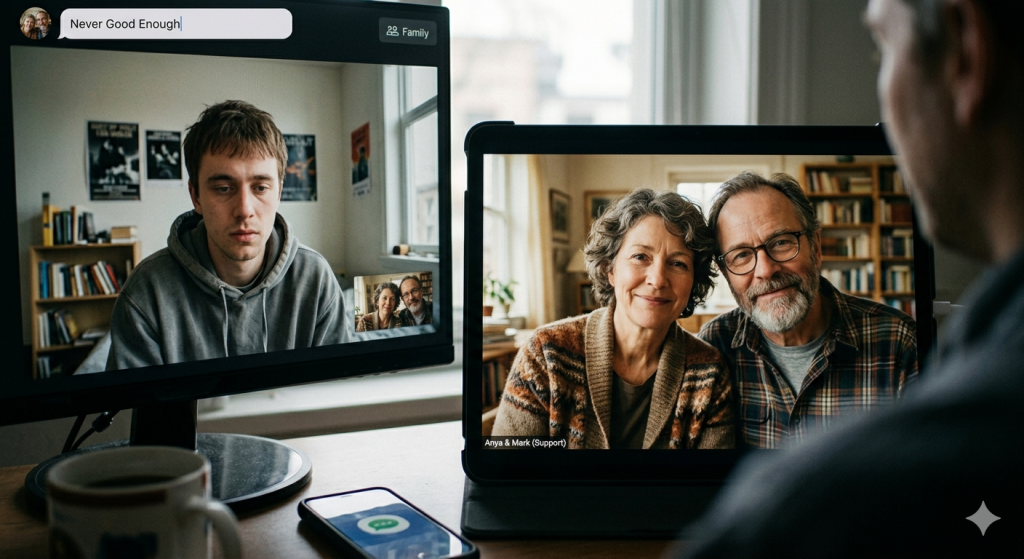
Vincent's parents 'never say he's good enough' - so he turned to a middle-aged couple online
Every day during lunch breaks and after work, 33-year-old Shanghai tech worker Vincent Zhang does something unusual: he opens his phone and watches videos made by a middle-aged couple he calls his “virtual parents.” The pair, who have nearly two million followers on China’s version of TikTok, Douyin, post short videos filled with encouragement, kindness, and parental affection. For Vincent, these videos provide something he says he rarely receives from his real parents—reassurance that he is already good enough.
In one of their most popular videos, the couple gently speaks to the camera as if addressing their own child. “Are you tired from work and study lately? Don’t push yourself too hard. Mum and Dad know that you have endured a lot,” they say. Thousands of viewers leave comments calling the pair “mum” and “dad,” sharing personal struggles and asking for advice, encouragement, and even birthday wishes. The videos have become a source of emotional comfort for many young Chinese people dealing with intense pressure and demanding family expectations.
For Vincent, the attraction is deeply personal. He says conversations with his real parents are often stressful and critical. They frequently question his career choices, believing he should have pursued a stable government job instead of working in the technology industry. They also pressure him about his personal life, repeatedly asking when he plans to marry and bring home a girlfriend. According to Vincent, these discussions leave him feeling that nothing he does is ever good enough.
“My parents are never the ones who tell me not to drive myself too hard or that I am already good enough,” Vincent explained. “But virtual parents will ask me whether I am happy today.” He says that from the moment his parents call, he feels as though every decision he has made is being judged and corrected. The warmth he experiences from online creators, even though he knows they are speaking to millions of people rather than directly to him, provides emotional support he finds difficult to obtain elsewhere.
The phenomenon of “virtual parents” has grown rapidly in China, reflecting wider social and economic changes. Many young Chinese adults grew up during a period of economic prosperity and rising living standards. However, in recent years, they have faced a slowing economy, a highly competitive job market, and persistent youth unemployment. Many feel exhausted by the pressure to succeed professionally and personally while also meeting traditional family expectations.
The creators behind one of the most popular virtual-parent channels, Pan Huqian and Zhang Xiuping, say they understand these struggles. Pan has spoken publicly about his own difficult childhood. He left home at the age of 14 to help support his family after his mother became paralysed. According to him, his parents never offered him words of encouragement, an experience that inspired him to create a different kind of family atmosphere online and in his own home. He frequently tells his daughter that he loves her, and she regularly appears in the couple’s videos.
Experts say the popularity of virtual parents highlights an ongoing conversation in China about parenting styles, emotional communication, and generational differences. Traditional values such as filial piety and academic achievement remain deeply important in many families. However, a growing number of young people are questioning whether constant criticism and pressure are beneficial to their mental well-being. Online discussions increasingly focus on parental control, emotional neglect, and the need for healthier family relationships.
Vincent understands that the videos are also a business and that content creators may be producing them for commercial reasons. Yet he says that does not diminish their value to him. The simple acts of kindness, reassurance, and emotional warmth offered by virtual parents provide a sense of comfort and understanding that he struggles to find elsewhere.
“I believe that a little bit of warmth is better than nothing,” he says. For Vincent and many others like him, a middle-aged couple on a phone screen has become a source of acceptance and emotional support in an increasingly competitive and stressful world.