
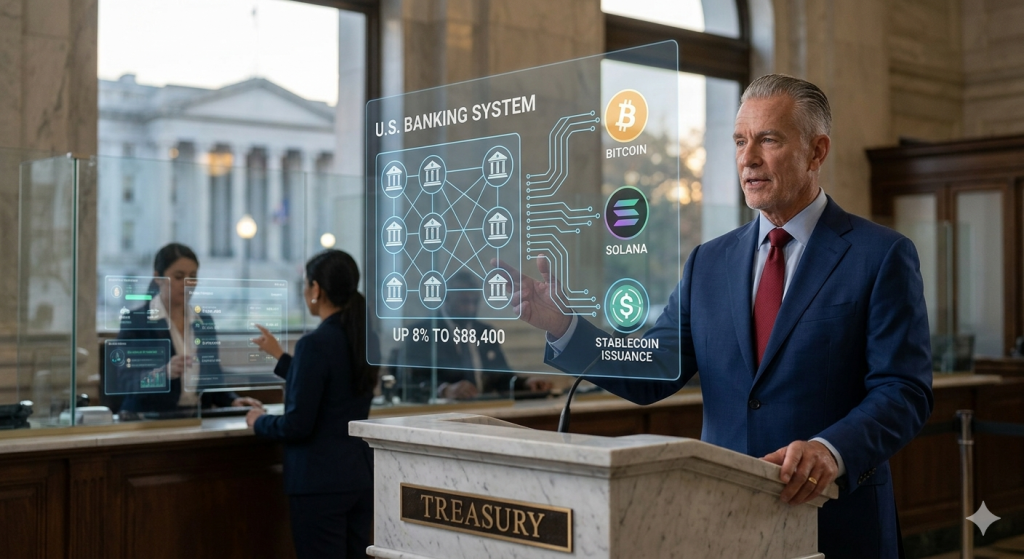
Trump Administration Official Pushes Crypto Into US Banking System
On March 22, 2026, a new chapter in American finance began with a major, administration-led push to formally integrate digital assets into the United States’ core banking infrastructure.
The Administration’s Blueprint for ‘Crypto-Banking’
Key officials within the Trump administration, including a new “Special Advisor on Digital Finance” at the Treasury Department, have laid out a multi-pronged strategy to ensure the U.S. financial system adapts to the growing crypto economy.
The central goal of the plan is to allow U.S. commercial banks to:
- Directly Offer Crypto Custody: To provide federally regulated and insured storage for assets like Bitcoin and Stablecoins, positioning banks as trusted gatekeepers.
- Support On-Ramps and Off-Ramps: To create seamless, instant conversions between U.S. Dollars and digital assets within traditional bank accounts.
- Utilize Stablecoins for Settlement: To allow banks to issue and settle transactions using regulated stablecoins, aiming to accelerate payment times and lower costs.
The Vision: ‘A Financial System of Freedom’
An administration official, in a widely quoted memo, argued that the move is not just technological, but philosophical. “The American banking system must be a bulwark of liberty and modernization,” the official wrote. “We are ensuring that U.S. citizens can access the tools of financial freedom, backed by the rule of law, from their trusted home institution. We will not leave this industry to overseas actors or un-American protocols.”
Market Impact and Regulatory Shift
The news has sent significant waves through both traditional finance and the crypto industry.
| Metric | Status / Value |
| Bitcoin (BTC) | Up 8% to $88,400 |
| Solana (SOL) | Up 12% to $108.50 |
| Stablecoin Issuance | $12B in new requests (24h) |
| Treasury Guidance | A ‘safe harbor’ protocol is established. |
The Path Ahead
The administration is preparing a suite of executive orders that would mandate regulatory bodies like the OCC and Federal Reserve to coordinate on a “Crypto-Native Regulatory Framework” designed to reduce friction for banks that want to integrate these services.
Analysis of Challenges
While market enthusiasm is high, significant hurdles remain:
- Political Divide: Congressional opponents have vowed to challenge the administration’s broad interpretation of banking laws, raising concerns about potential impacts on financial stability.
- Operational Hurdles: For traditional banks, the technological leap to managing cryptographic keys and maintaining robust compliance for digital assets is immense and will take years to fully realize.
This initiative by the Trump administration signals a massive pivot from prior, more cautious regulatory stances and could fundamentally redefine the U.S. dollar and banking systems for the next decade.
Note: Over $400 million in short-seller positions were liquidated in the 24 hours following the announcement.