
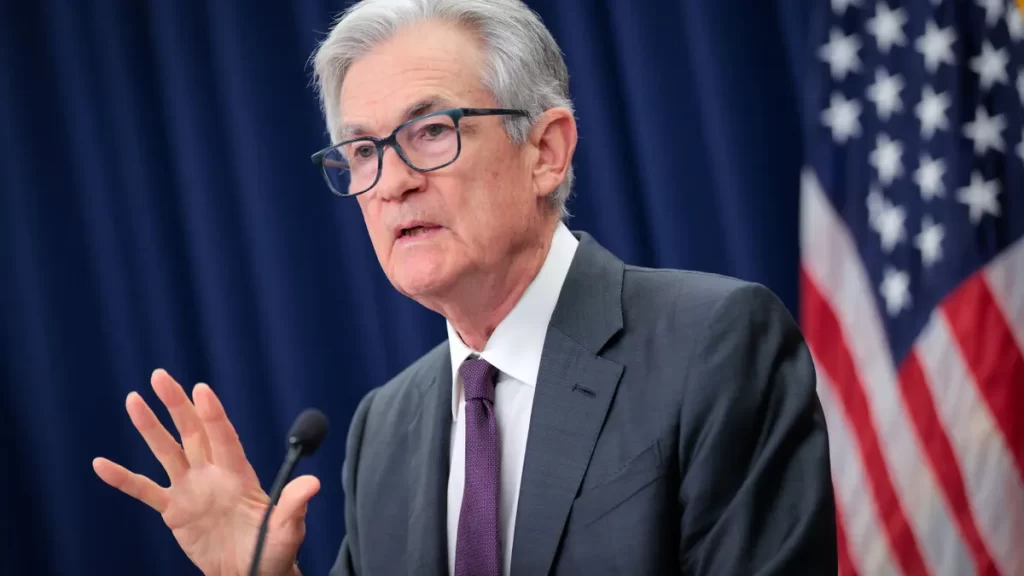
Fed holds US interest rates steady as uncertainty over Trump's Iran deal remains
WASHINGTON — In a highly anticipated move, the Federal Reserve on Wednesday held its benchmark interest rate steady, opting for a wait-and-see approach as the global economy braces for the fallout of President Donald Trump’s pending memorandum of understanding (MoU) with Iran.
The Federal Open Market Committee (FOMC) voted unanimously to maintain the federal funds rate in its current range of 3.50% to 3.75%. The decision marks the first policy directive under newly appointed Fed Chair Kevin Warsh, who took the helm amid a chaotic backdrop of geopolitical instability, surging domestic inflation, and a public campaign of economic intimidation from the White House.
A Cautious Pause Amid Geopolitical Storms
In a noticeably streamlined and direct policy statement, the central bank acknowledged that while domestic economic activity continues to expand at a solid pace, “elevated uncertainty” stemming from Middle East hostilities continues to cloud the horizon.
The Fed’s decision to hold the line reflects deep institutional anxiety regarding the fragility of the proposed 14-point U.S.–Iran peace deal. While oil prices initially plummeted by $4 a barrel on the news of a looming accord, fresh Israeli airstrikes on targets in southern Lebanon and Beirut have threatened to shatter the fragile diplomatic framework before the ink is even dry.
For the central bank, this regional instability represents a direct threat to domestic price control. “Inflation remains elevated relative to the Committee’s two percent goal,” the FOMC statement noted, explicitly pointing to recent supply shocks that have driven volatile price increases across key sectors, most notably energy.
The “Hawkish Pivot” and the Warsh Doctrine
The real shockwave for Wall Street came not from the rate pause itself—which markets had largely priced in—but from the central bank’s updated Summary of Economic Projections, known colloquially as the “dot plot.”
In a decisive hawkish shift, policymakers completely eliminated previous projections for near-term monetary easing. Instead, the median forecast revealed that nine out of twelve officials now anticipate at least one interest rate hike before the end of the year, signaling that the era of aggressive rate cuts is firmly over. Furthermore, the Fed raised its year-end Personal Consumption Expenditures (PCE) inflation expectations sharply to 3.6%, up from the 2.7% projected in March.
Fed Funds Rate Target (June 2026): 3.50% – 3.75%
Projected Year-End PCE Inflation: 3.6% (Up from 2.7%)
FOMC Vote Consensus: 12–0 Unanimous to Hold
During his debut press conference, Chair Warsh introduced a noticeably sparser, “less-is-more” communication style, dispensing with traditional forward guidance in favor of raw data dependency. Addressing the obvious friction between the Fed’s tightening bias and President Trump’s vocal demands for lower borrowing costs, Warsh remained steadfastly neutral.
“Today’s statement just gives you the facts as best we can judge them,” Warsh stated calmly. “It is pretty hard to justify a rate cut when you have got significant inflation already baked into the supply pipeline.”
Market Repercussions and the Road Ahead
The combination of sticky domestic inflation—which hit a three-year high of 4.2% in May—and the looming threat of an energy supply disruption has left the Fed with an incredibly narrow path to navigate. If the Strait of Hormuz successfully reopens under the terms of the Trump administration’s 60-day interim agreement, supply chains could stabilize, offering the Fed room to breathe.
However, with Iran warning that the deal remains “incomplete” without a total Israeli withdrawal from Lebanon, and global crypto markets suffering a cascading $1 billion liquidation earlier this week, the markets remain on a knife-edge. For now, the Federal Reserve has made it clear that it will not gamble on diplomatic promises. Until the ink is dried on a global treaty and energy corridors are verified secure, interest rates will remain higher for longer.